Sunday, 29 November 2009

Composting in a small garden.


I'm the kind of person who goes all out to try and be green. You name it, we do it, energy saving lightbulbs, water butt, recycling, freecycle etc etc The one thing we don't do which I feel incredibly guilty about is composting - but we did have washable nappies for Xanthe so that's got to off set somewhere along the line hasn't it?

I've struggled to find a composting solution for our small garden. I genuinely haven't got space for the traditional kind of compost bin which needs to be in direct contact with the ground. I'm also a bit worried about the smell as we'd be barbecuing/playing/drinking summer evening wine all around it. We tried a wormery in the garage once but fairly rapidly killed all the occupants - no idea how - we felt appallingly guilty and didn't feel confident having another go and risking another massacre until we knew where we went wrong.

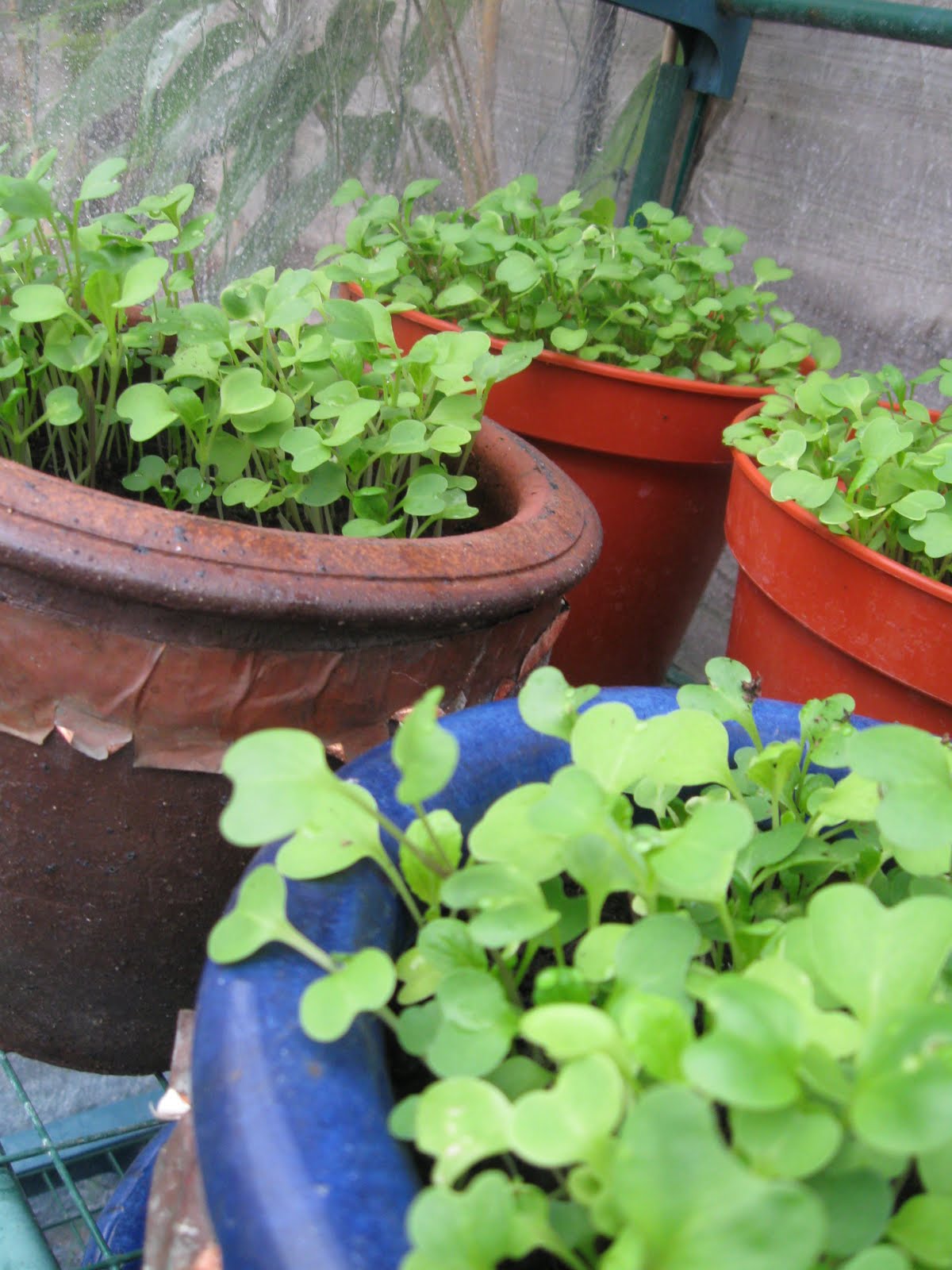
The other problem is what to do with the compost once you have it. My tiny yard is about 5m x 6m. The shady side where nothing grows is occupied by a chicken coop. In addition I have 2 borders making an 'L' shape which are crammed with veggies, a mini greenhouse (pictured with it's winter seedlings a few weeks ago), several hanging baskets, a handful of pots and my radish skyscraper. My only real opportunity to dig in compost is around January/February before the main planting season begins and I actually don't need a huge amount of compost for my borders and pots - so what to do with it the rest of the year?

I currently assuage my guilt by using the local council's garden waste collection scheme. They very kindly take away our garden waste and take it to some sort of community composting arrangement. Kitchen scraps are dealt with by the combined forces of our cat, the chickens, the African Land Snails and Adam. But this still leaves me with the problem of how to re-vitalise our hard working soil over the winter period.

Last year I planted green maure (field beans) which seemed like the ideal solution. The only problem with this is that they're really hard to dig in properly, the pesky seedlings kept re-sprouting from the soil like tiny green phoenixes which played havoc with my legitimate broad bean crop though I suppose I could get around that problem with some sort of toilet roll tube arrangement.

My latest idea is the Bokashi Bran system. It's speedy composting, aided by a 'bran' mix which contains friendly bacteria and it can compost stuff that a traditional heap can't, like small bones and cooked food. The mixture is then dug into the soil and allowed to break down for another 6 weeks before crops can be planted on it. My theory is we could just collect kitchen scraps in the Autumn and turn them into compost for early spring. The only trouble is timing is a bit tight at the moment, I believe the box we have takes about 6 weeks to fill with scraps so we'd have to fill the box up really quickly which is fairly unlikely given the troop of scavengers that inhabit this house.

Still, I've sent off for my bran in the hope we can make it work, maybe I'll fall back on the green manure if we don't have enough leftovers to make it work. Or maybe Adam can stop having seconds for a little while - who knows ....

Monday, 23 November 2009

Christening the Medlars


Today I cooked Medlars for the first time, christened the Medlar you might say. I've been keen to try them for ages but they're difficult to get hold of these days. They were popular in this country in the Victorian era but have fallen out of favour in recent times, I don't think they are grown commercially anymore so you have to either find one growing wild or grow them yourself. Fortunately for me, someone with a Medlar tree in their garden was giving some away on our local Freecycle. I was lucky enough to be the chosen recipient and got my hands on a large boxful.

One thing I can say for certain, they are NOT a thing of beauty. Pictured are the raw fruit, looking squat, spiky and sullen and, believe me, the appearance does not improve on cooking. As you may already know, Medlars aren't fit to be eaten raw, you have to wait til they're rancid. Properly rancid - completely brown, soft and squidgy (more correctly known as 'bletted'). I bravely ate one raw which was, ummm, tolerable. It had an unusual sweet/sour taste which wasn't awful but I struggled to silence the voice in my head screaming "WHAT ARE YOU DOING? IT'S ROTTEN!"

Medlars are reasonably well known for making good jams, jellies and chutneys but seeing as we have huge quantities of all of those I decided to try Medlar 'fudge' (scroll down a bit for the recipe). I'm not sure the term 'fudge' is entirely appropriate as it's not a fudge by any stretch of the imagination but is much closer to a fruit butter. It's kind of like a smooth, thickish jam but not as thick or grainy as something like Membrillo which leads to another kind of Medlar christening - what should this recipe be called? Medlar curd? Medlar cream?.

The final product has a complex flavour. I can taste elements of quince, apple and pear in there, underlined with a rich, spicy, caramel, vaguely reminiscent of Christmas. It's indescribably delicious served as suggested in the recipe I linked to, that is, mixed with cream, crushed macaroon biscuits and drizzled with maple syrup. All in all a resounding success, I may even plant a Medlar on our mythical allotment - if it ever materialises.

Sunday, 22 November 2009

Fresh November veggies.


This post now seems to be mocking me! Last Hurrah? Back in September? Pah! A quick 15 mins in the garden today produced more than enough veggies for tonight's dinner, which seems amazing to me as a novice winter gardener.

I harvested a large pile of Swiss Chard which has perked up immensely since September. I seem to remember at the time we had a prolonged dry spell which caused the powdery mildew to attack everything in sight. The near constant rain ever since has produced lots of lovely, strikingly verdant new leaves. I also dug up a large bowl of Jerusalem artichokes - the first of the crop and just a tiny fraction of what remains in the ground (the photo is of wizened artichoke stems against a winter sky). The Chard I'll steam and serve buttered with garlic and the artichokes will be tossed in seasoned flour and shallow fried til gorgeously, crispy, nutty brown.

The November radishes and salad are also vying for harvesting attention and the pak choi/tatsoi could do with thinning a bit. (Thinning! In November!) I do have to admit defeat with the butternut squash though, it's a huge plant, stretching halfway down the front garden and it made lots of flowers but none pollinated and we didn't get any fruit.

I'm quite proud of the amount of produce we get from our tiny garden. When planning next year's crops I'm going to give serious thought to maximising yields in relation to space used, more of which anon. Now I just need the pesky chickens to start laying again ......

Friday, 20 November 2009

A Glut Squared


Is how Hugh Fearnley Whittingstall describes a surfeit of preserves. You preserve your glut then have a glut of preserves, which is what I am currently in possession of. I've come to view my jams and chutneys more as ingredients than as products in themselves, after all there's only so much jam and toast or pork pie and pickle any non-obese person can eat. I won't re-hash old ground but will instead refer you to Hugh's original article here which gives a few ideas.

This winter I'm experimenting with the preserve store in an attempt to add to his suggestions with a few of my own. I have previously given a brief mention to yellow bullace jam as a sticky glaze for chicken legs. I cook the chicken in the oven then brush it with warmed jam before putting it under the grill to caramelise and sprinkle with dried lavender flowers before serving. More recently I made Delia's Cumberland Sauce using sloe jelly in place of redcurrant jelly. It made a deliciously tangy sauce which I served poured over thin frying steak as this was before I learned it is more correctly served with white meat but, hey, we enjoyed it.

As I type I have a fragrant mutton tagine in the slow cooker. Thanks to Hugh's article, no stew in this house is complete without a dollop of chutney and today is no exception as alongside the mutton, chick peas, tomatoes and spices is a generous half jar of gooseberry chutney. I've also experimented with my Spiced Pear Chutney, as I mentioned before I was somewhat disappointed with it as a chutney as it tastes too much like cold curry but stirred into a slow cooked stew and served fresh flat bread and raita, it really comes into it's own. The mutton I have stockpiled in the freezer is the perfect foil as the sharp, sweet chutney flavours cut through the fatty meat.

Today is Adam's birthday so for dinner tonight, alongside the tagine we're having sesame bread and possibly a few jerusalem artichokes if I can be bothered to dig some up! But we're definitely having River Cottage pear cake for dessert - it's all done for Adam's benefit obviously, it's not like I'd use his birthday as an excuse or anything, oh no, perish the thought .....

Monday, 16 November 2009

Wild mushrooms and leftover chicken


Yesterday was a lovely day. We broke our mushroom hunting duck with a little help from some friends (well, an awful lot of help if the truth be told) Adam and I have shied away from mushroom collecting in the past mainly down to our inherent reluctance to poison the family. If you flick through a mushroom identification book almost every edible mushroom seems to carry the caveat "Not to be confused with the deadly poisonous (but almost identical) Stinking Hornbeam of Death!" - or similar (though, ironically the black Trumpet of Death fungus is actually edible). But some friends who have a history of wild mushroom gathering and subsequently clinging to life invited us along on their forage so we decided to give it a go.

It was, apparently, ideal mushroom gathering weather, bright and warm after a period of rain. You'll be relieved to hear we didn't eat the Fly Agaric pictured but what we did find were a large patch of Boletus something-or-other, closely related to ceps but not quite ceps. It was a hugely rewarding and rather exciting experience. It's totally different to gathering wild fruit as once you know where a fruit tree is you can reliably go back year after year and be sure that, weather conditions permitting, you'll have a crop of fruit. Mushrooms are way more random in that, you can identify a likely environment, you may know there's a history of mushrooms in that area, but you still can't be sure where the damn things are! You need to rummage around in the leaf litter (where they're very well camouflaged) and it's down to sheer luck whether you find what you're looking for or not.

We adults got rather over excited and raced around the bracken patch like loons once we found our Boletus. Even the children got quite carried away, screeching "Mushroom!" every time they found one though they were under strict instructions not to touch any themselves.

I think the main benefit for Adam and I was the confidence building. We've ordered ourselves a field guide to mushrooms and will happily have another go at mushroom foraging under our own steam. Here's how I used some of our box of mushrooms:

Leftover chicken and wild mushroom pie.
200g chopped mushrooms
2 cloves garlic
300g leftover cooked chicken
75g butter
25g flour
200ml chicken stock
Thyme (fresh or dried)
1 medium potato

Melt 50g of the butter, add the mushrooms and garlic and a pinch of salt. Cook over a medium heat until all their liquid is released, then turn the heat up to boil the liquid off. Add the cooked chicken.

In a separate pan, melt the rest of the butter then add the flour to make a roux. Pour in the chicken stock and whisk to form a smooth sauce. Pour over the chicken and mushroom mixture, add the thyme and some seasoning and mix. Put into an ovenproof dish. Slice the potato thinly and layer over the top in a hotpot fashion and dot with butter.

Bake at Gas Mark 6 for about 30 mins or until the potato is golden on top and the filling heated through.

Saturday, 14 November 2009

Sloe Jelly with Port.


Oh good Lord, what a day. The weather out there is just foul, earlier on we ducked out into town to buy some football boots for Willow. The walk from the car to the sports shop was about 3 minutes and in that 3 minutes all 4 of us got soaked to the skin. It's cold, it's windy, it's wet. Ugh.

On the bright side, it's perfect weather for locking myself in a warm, steamy kitchen with a bubbling jam pan for an hour or two. I'm experiencing that familiar end of season "Quick! What can I make!" panic, when I frantically scour the hedgerows for the last remnants of wild fruit before retiring til summer. My last minute forage turned up the last few wilding apples still clinging stubbornly to the trees plus a wealth of sloes (not purple bullace). I'm not sure what made me think of adding port, I'd never even tasted it before I bought a bottle last weekend with this recipe in mind, it just kind of sounded right and, luckily, it tastes right too.

Sloe Jelly with Port.
700g sharp, wild apples
300g sloes
sugar and port (see method for quantity)

Roughly chop the apples and throw them into a pan with the sloes. Add enough water to almost cover the fruit. Bring to the boil and them simmer til soft. Strain in a jelly bag (or colander lined with muslin) for several hours. Measure the strained juice and add 1lb sugar and 2tbsp port per pint. Boil til setting point is reached and pot in the usual way. The yield is about 2.5lbs per pint of juice.

I'm very pleased with the final product and judging by the squabbles over who gets to lick the pan, it's going to be popular. The port gives the jelly a delicious sweetness and depth, though I think if I make it again I'd increase the amount of port as it's quite subtle. I'm now vaguely disappointed that I got a chicken out of the freezer for tomorrow's roast rather than mutton as I'm sure it would make an ideal partner for my sloe and port jelly.

Next task - Medlars!

Tuesday, 10 November 2009

Chutney Bread and other adventures.


Hmmm. Undecided. I experimented with chutney bread today. I found a recipe for piccalilli bread but it's obviously a heinous crime in this house to be caught with shop bought preserves so I decided to make it with my gooseberry chutney instead. I made it in the breadmaker, standard 2lb loaf with with half and half stoneground, wholemeal flour and normal strong, white bread flour plus 4tbsp chutney. The resulting bread is nice but not obviously chutney bread, if you see what I mean. It has a dark, sweet, chewy flavour vaguely similar to a wholemeal loaf I used to buy made with treacle. I think I'll try it with a stilton ploughman's and a glass of port before passing my final verdict. (by the way, I only recently discovered port, why did no-one tell me it's not like sherry at all?)

Elsewhere in the kitchen I've been teaching Willow and Xanthe to make crumble (pictured) I was sent a bag of quinces by a very kind friend and we made spiced quince crumble (chucked a couple of cloves into the water when simmering the quinces and added ground cinnamon and allspice to the cooked fruit) which was delicious. Since the arrival of half a dead sheep at our house I have the luxury of a chest freezer so as we are already stuffed to the gunnels with preserved quince in numerous forms I decided to just plain old freeze the remainder.

It struck me that I'm actually quite fortunate to have got by with only a small freezer until now. What with necessity being the mother of invention and all that, it's forced me to get creative on the preserve front. If I'd started out with a chest freezer, it would have been very easy to just throw bagfuls of wild fruit in there and just use them as they are but as it is I now have an array of 'new' products like ketchups, cordials and bottled frui to use. Next time I make quince crumble I'm going to add in some of my pears bottled in mulled cider, much more interesting than just plain old poached pear.